Photodynamic Therapy
An in-office treatment that pairs a topical medication with blue light to clear precancerous spots caused by sun damage.
What To Expect
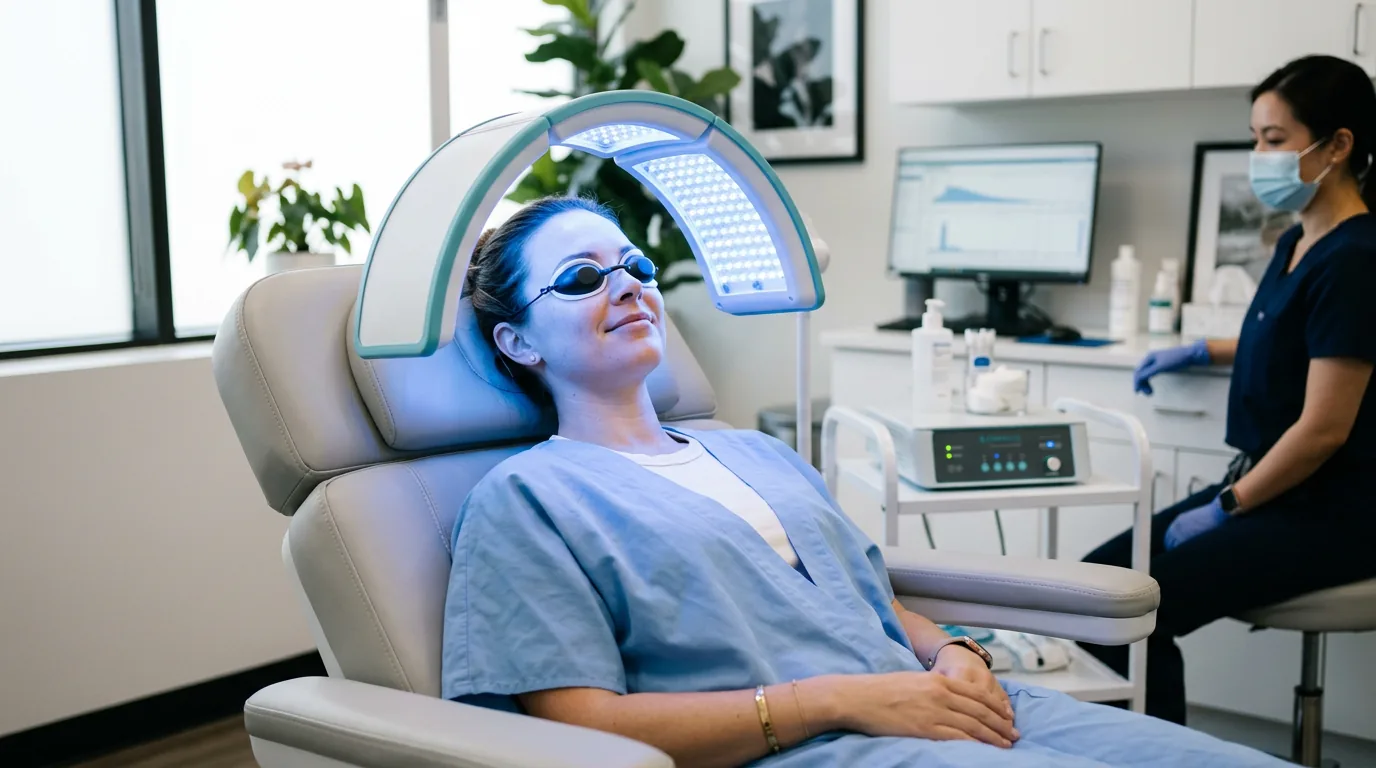
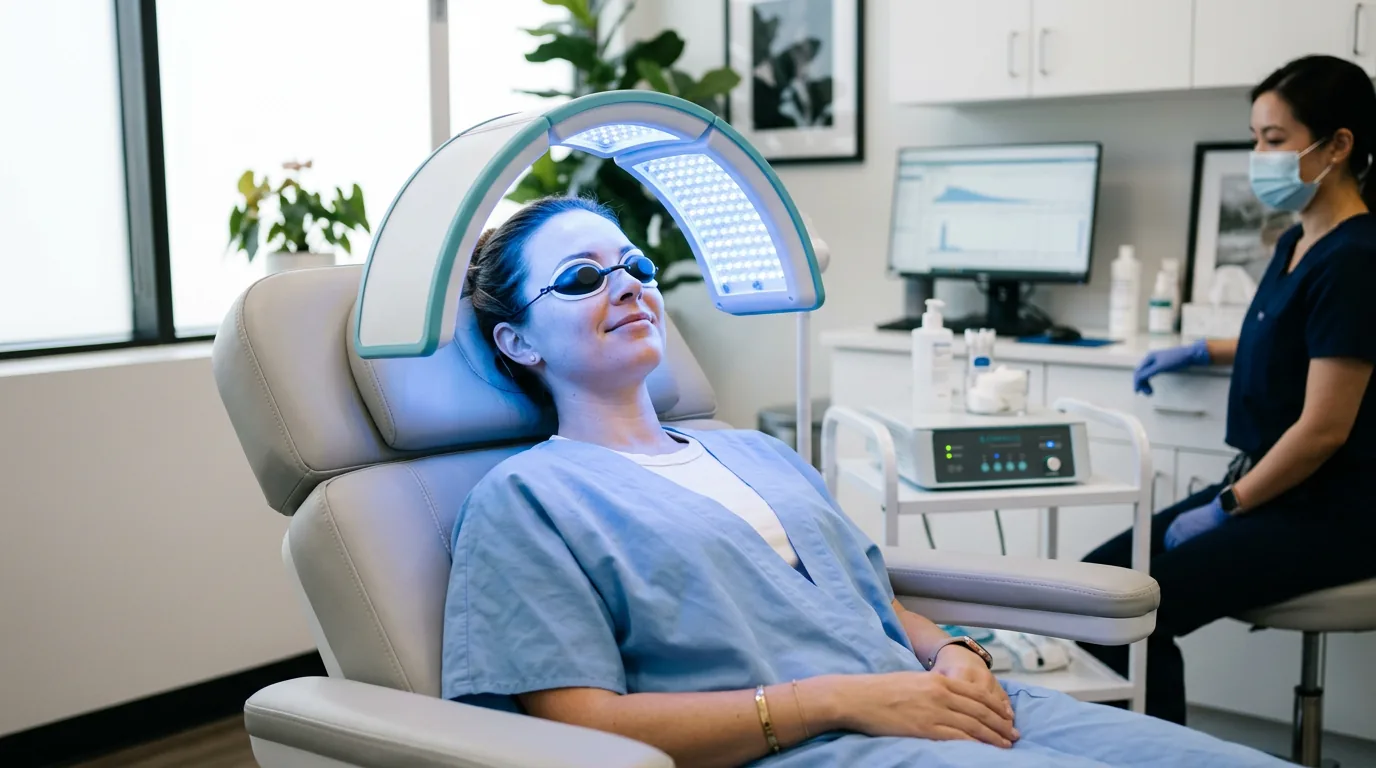
Your skin is cleansed, then a light-sensitizing solution (aminolevulinic acid) is applied and left on for 1 to 3 hours. You then rest with protective goggles while a blue light shines on the treated area for about 16 minutes. Most patients feel mild stinging, tingling, or warmth during the light, and a cooling fan helps.
What to Know
What It Treats
FDA-approved for actinic keratoses (precancerous lesions). It can also clear early spots that are not yet visible.
Number of Treatments
Two treatments are usually recommended for best results.
Recovery
Redness, swelling, and mild scaling are common for up to a week, depending on the amount of sun damage.
Frequently Asked Questions
What are actinic keratoses?
Rough, scaly spots caused by long term sun exposure. They are considered precancerous because a small number can turn into skin cancer over time, so treating them is a good idea.
Does PDT hurt?
Most people feel stinging, tingling, or warmth while under the blue light. A cooling fan helps, and the feeling usually eases soon after the light turns off.
How long is the appointment?
Plan for about 2 to 3 hours, including the time the medication soaks into your skin. You do not have to stay in the office during that wait.
What will my skin look like afterward?
Expect redness, swelling, and peeling similar to a sunburn for about one to two weeks. Areas with more sun damage usually react more.
Why do I need to avoid light after treatment?
The medication keeps your skin very sensitive to light for about 48 hours. Sunlight and bright indoor light during that time can cause a painful reaction.